Stacks of paper still sit in many offices. Cabinets packed with files. Boxes in storage rooms that no one wants to open again. Yet most businesses now rely on digital systems to move fast and stay organized.
That is where a Large Format Scanning Service often enters the picture. Big paper records, especially maps or construction drawings, can block the shift to digital systems. Converting those documents into searchable files removes a huge barrier. And the same thing happens in healthcare when paper charts are digitized.
Digital transformation may sound like a tech buzzword, but at its core it means something simple. Information becomes easy to access, easy to store, and easy to protect.
Why Document Scanning Matters in Digital Transformation
Digital tools cannot work well if important records are locked in paper folders. This happens in many industries. Construction firms store large design drawings. Hospitals keep shelves of patient charts. Government offices manage records that must stay available for years. Scanning solves this gap between paper and digital systems.
Once files are digitized, teams can search for documents in seconds. No digging through boxes. No waiting for someone to pull a file from storage.
Many organizations begin their digital transformation journey by scanning old records first. It is practical. It reduces clutter. It also prepares businesses for cloud storage and secure document management.
How Large Format Scanning Service Helps Technical Industries
Large documents bring a special challenge. Blueprints, engineering plans and detailed maps are often too big for regular scanners.
A Large Format Scanning Service will change these oversized records into clear digital files and retain all the details. That includes measurements, lines, notes, and stamps that matter in technical work.
Industries that use this service often include architecture firms, construction companies, engineering teams, and city planning departments.
Common benefits include:
- Digital blueprints that keep every detail clear
- Fast file retrieval without searching through rolled plans
- Easy sharing between project teams and remote workers
Safe archiving of fragile or aging documents
A planning office in California digitized thousands of city maps during a records modernization project. Staff members said finding a document used to take half an hour. Now it takes less than a minute. Small change on paper. Huge change in daily work.
Why Medical Records Scanning Service Is Critical for Healthcare
Hospitals handle a different kind of paper problem. Patient files grow year after year. Charts include notes, test results, imaging reports, and insurance forms. Over time the volume becomes overwhelming.
A Medical Records Scanning Service converts those files into organized digital records. Doctors and nurses can open patient history instantly without digging through folders.
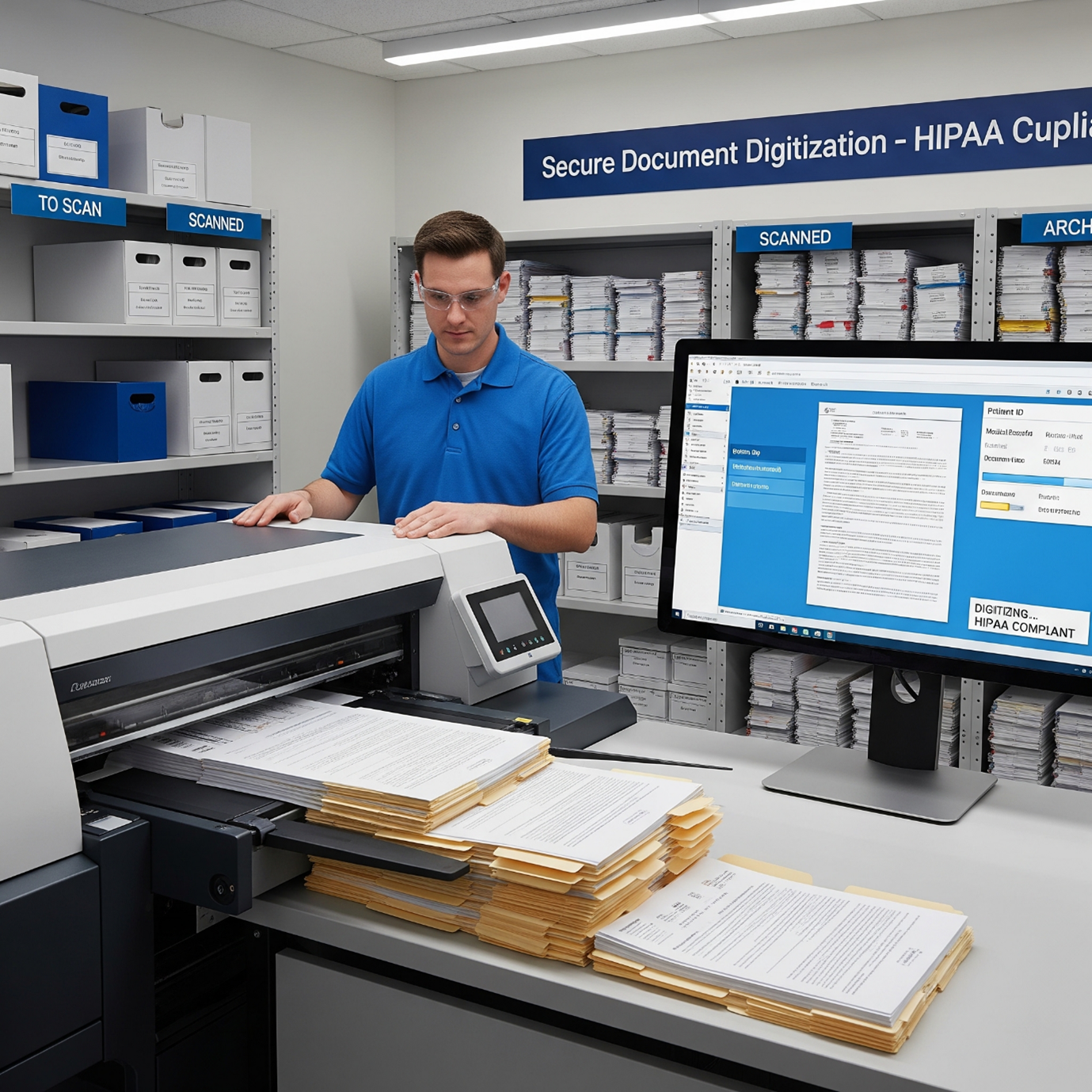
Medical Records Scanning Service
Healthcare organizations often adopt scanning projects to improve efficiency and meet compliance requirements.
Major advantages include:
- Instant access to patient information during treatment
- Secure digital storage that supports HIPAA compliance
- Lower storage costs and less paper handling
- Better organization through searchable records
Research in healthcare administration shows digital record systems can reduce administrative workload by around 25 percent. Staff spend less time managing files and more time focusing on patient care.
What the Digitization Process Usually Looks Like
Scanning projects follow a clear process. It is not complicated, but accuracy matters.
- Typical document scanning workflow
- Paper records are sorted and prepared for scanning
- High-resolution scanners capture each document
- OCR software makes text searchable
- Files are stored in secure digital systems or cloud platforms
Once this process finishes, thousands of documents become easy to locate with a simple keyword search.
Real Lessons from Organizations Going Paperless
Digitization projects work best when companies start small. Many begin with their most-used documents. Others focus on records required for compliance.
Indexing also matters more than people expect. A well-organized digital archive saves hours of work later.
Paper systems feel familiar. Yet they slow down communication, delay decisions and create storage problems. Digital records remove those barriers and help teams move faster.
Conclusion
Digital transformation begins with information. Paper files still hold valuable data in many industries, but accessing them quickly can be difficult.
A Large Format Scanning Service helps technical organizations digitize maps, blueprints, and engineering drawings. A Medical Records Scanning Service allows healthcare providers to manage patient records safely and efficiently.
Both services play a quiet but important role in helping organizations move away from paper and toward faster, more secure digital systems. Businesses that want to modernize their record management often start this journey with specialists like Access Scanning Document Services.